

This site is no longer active!
If you are the owner, you must reactive this site for it to be published again
or contact us at support@rebolthq.com

If you are the owner, you must reactive this site for it to be published again
Curious what “fine gardening” maintenance includes? Learn what’s in a weekly care plan, how scheduling works, and what to expect from a dedicated garden crew.
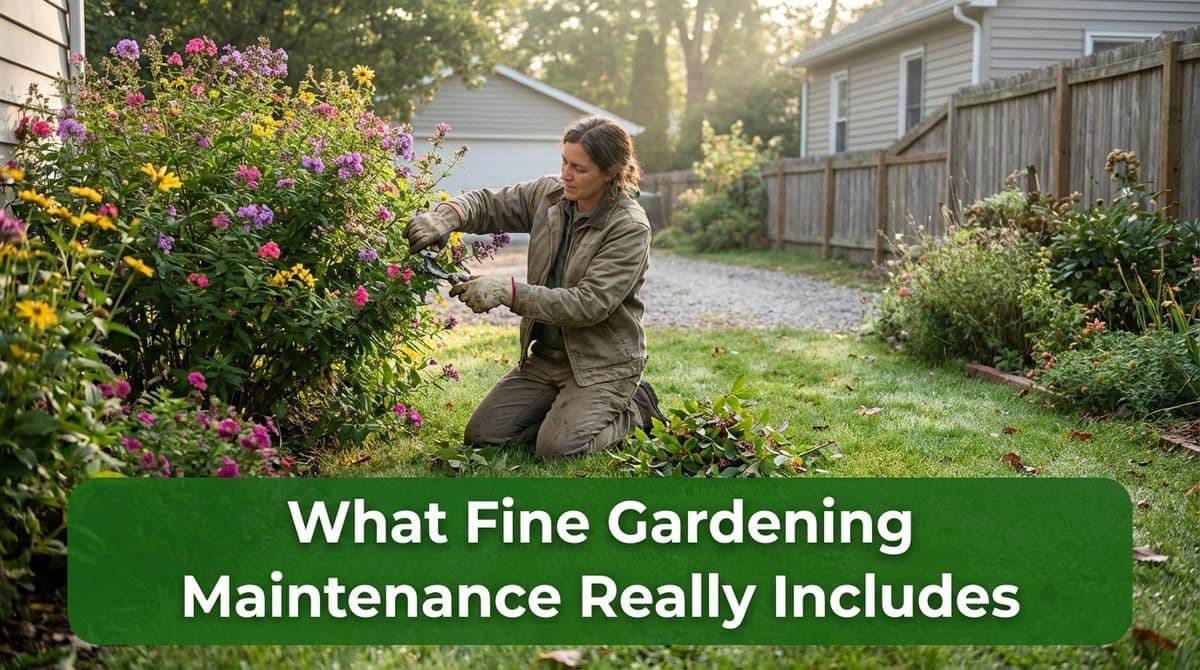
We recently got a call from a homeowner — let’s call him Mark — who said something we hear a lot: “I’m looking for someone who does more than just mowing and blowing… real fine gardening.”
Mark’s yard was already in decent shape, but he wanted ongoing care for his planting beds, shrubs, and perennials — not just someone to cut the grass and leave. He was considering weekly service but wasn’t sure what that should include or how we schedule the work.
Since many homeowners ask the same questions Mark did, we thought we’d walk you through what “fine gardening” maintenance actually means, how weekly plans work, and what you should expect when you sign up.
When people say they want fine gardening, they’re usually asking for detail work in the garden beds, not just lawn care. With Mark, we made this distinction clear during our conversation.
Basic lawn service usually includes:
Fine gardening maintenance focuses on the plants and beds themselves:
In other words, mowing keeps things neat from a distance; fine gardening makes the garden look cared-for up close.
One of Mark’s big questions was, “Does someone come out and look first?” In our case, we often start by looking at the property on an online map to estimate size and complexity. From there, we send a detailed estimate describing what’s included in weekly maintenance.
If the property is more complex or the homeowner wants to walk it with us, we schedule an on-site visit with a manager when available. That’s where we confirm plant types, priorities, and any problem areas, then adjust the plan if needed.
Once you approve the estimate, we set up your recurring weekly visit. From that point on, you’ll typically see the same gardener at your home, so they really get to know your landscape and how it changes over time.
Mark was also curious whether we “do everything” every time we come. The short answer: no — and that’s by design. A good fine gardening plan spreads tasks out so your garden gets consistent attention without rushing.
Here’s how we usually structure a month of weekly visits:
Your gardener evaluates the property on the first visit each month and adjusts the plan as your garden changes with the seasons. The goal is a yard that always looks “in progress but under control,” instead of one big cleanup a few times a year.
Like Mark, many homeowners ask if they really need weekly service. It depends on your property and expectations. During our initial conversation, we’ll often review a few key factors:
For Mark, we recommended starting with weekly fine gardening and revisiting the schedule after a couple of months. It’s often easier to scale back once a garden is under control than to catch up from behind.
Another question Mark asked was whether he’d see the same crew each time. In our system, we assign one primary gardener to your property. That gardener:
You should also expect clear communication. We recommend reviewing your estimate line by line so you know exactly what is and isn’t included. If you ever feel the plan doesn’t match what you had in mind, a quick conversation usually fixes it.
If you’re nodding along with Mark — you like your yard, but you want more than a quick mow-and-blow — a weekly fine gardening plan may be a great fit. It’s especially helpful if:
The next step is simple: have a clear conversation with your gardener or landscaping company about what “fine gardening” means to you, how often you want them there, and what results you expect month to month. With the right plan, your garden won’t just be maintained — it will actually improve over time.